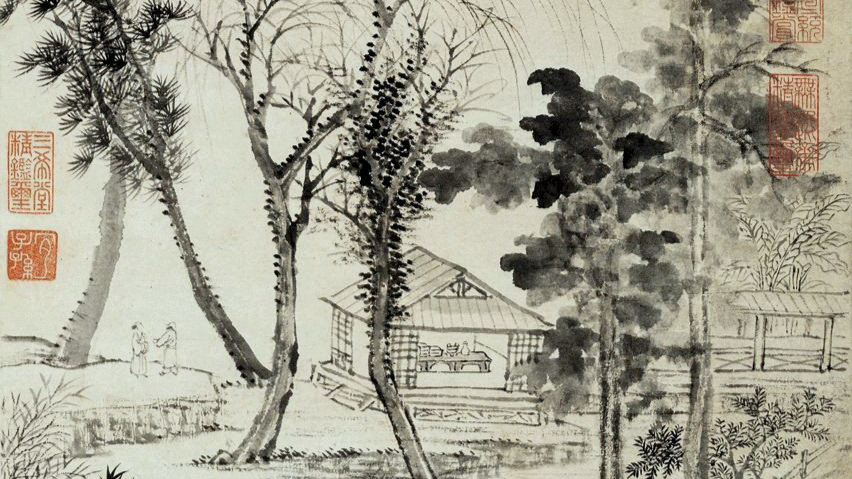
Shadows of Paulownia Trees in the Autumn Evening
Introduction
Shadows of Paulownia Trees in the Autumn Evening is an illustrious painting by Wang Hui, a prominent figure among the renowned "Four Wangs" of the early Qing Dynasty. This masterpiece encapsulates Wang Hui's adeptness in blending various artistic traditions and his meticulous attention to natural details. Known for its evocative portrayal of an autumnal landscape, the painting stands as a testament to the painter's ability to capture the delicate balance between nature and artistic expression. Wang Hui, alongside his contemporaries Wang Shimin, Wang Jian, and Wang Yuanqi, was instrumental in shaping the landscape painting style of their era, and his works continue to be celebrated for their profound cultural and historical significance.
Background
During the early Qing Dynasty, the art world in China was significantly influenced by the "Four Wangs," a group of painters who were not only bound by their common surname but also by their shared artistic philosophies and techniques. The group included Wang Shimin, Wang Jian, Wang Hui, and Wang Yuanqi. This collective was deeply rooted in the literati traditions of southern China, emphasizing the importance of classical styles and techniques inherited from previous dynasties. Their works often reflected a synthesis of influences from both the Yuan (1271-1368) and Ming (1368-1644) Dynasties, showcasing inspirations from earlier masters such as Huang Gongwang, Ni Zan, and Dong Qichang.
Shadows of Paulownia Trees in the Autumn Evening exemplifies Wang Hui's skill in combining elements from different regional styles within China. His works are noted for their detailed observations of nature, which are vividly brought to life in this painting. The painting was likely inspired by the serene landscapes and rich cultural backdrop of southern China, which was a recurring theme in the "Four Wangs'" oeuvre.
Cultural Significance
The cultural significance of Shadows of Paulownia Trees in the Autumn Evening lies in its embodiment of the Qing Dynasty's artistic ideals. The painting reflects the literati's veneration of nature, their pursuit of harmony between humanity and the natural world, and their dedication to preserving and revitalizing the classical traditions of Chinese art. The "Four Wangs" played a crucial role in what became known as the orthodox style, a highly revered painting style within the imperial court. Their works, including Wang Hui's, were seen as a mark of refined taste and cultural sophistication, making them highly sought after both during their time and in subsequent generations.
Artistic Themes
Shadows of Paulownia Trees in the Autumn Evening captures several dominant artistic themes prevalent in Wang Hui's work and the broader school of thought espoused by the "Four Wangs." These themes include:
Symbolism
The painting uses the paulownia trees, commonly associated with autumn, to symbolize tranquility and introspection. In Chinese culture, the paulownia tree is often seen as a symbol of resilience and enduring beauty, particularly in the face of changing seasons. This symbolism is woven into the painting's composition, evoking a sense of timeless reflection and continuity with nature.
Emotional Tone
The emotional tone of the painting is serene and contemplative, inviting viewers to reflect on the passage of time and the quiet beauty of nature's transformations. Wang Hui's careful attention to detail and his subtle use of color and shading create an atmosphere of peaceful solitude, encouraging onlookers to immerse themselves in the depicted landscape.
Historical Context
Origin and Inspiration
Shadows of Paulownia Trees in the Autumn Evening was created during a period when the "Four Wangs" were actively engaged in exploring and reinterpreting classical Chinese painting styles. This painting draws inspiration from the traditions of earlier dynastic masters, yet it distinguishes itself through Wang Hui's unique approach to integrating elements from both southern and northern Chinese landscapes. His work reflects a deep appreciation for the natural environment and a desire to capture its essence in a way that resonates with the viewer.
Influence on Later Works
The influence of Wang Hui and his contemporaries extends well beyond their lifetime, impacting the trajectory of Chinese landscape painting. Their emphasis on classical techniques and literati ideals helped to establish a standard that both their contemporaries and successors aspired to emulate. Shadows of Paulownia Trees in the Autumn Evening, with its intricate detailing and harmonious composition, has inspired countless artists who seek to capture the spirit of the Qing Dynasty's orthodox style in their own work.
Reception and Legacy
Shadows of Paulownia Trees in the Autumn Evening has been celebrated for its artistic excellence and its contribution to the rich tapestry of Chinese art history. As part of the collection of works by the "Four Wangs" housed in the Palace Museum, it continues to be studied and admired by scholars and art enthusiasts alike. The ongoing exhibitions and publications, such as the 10-volume panoramic album featuring a comprehensive collection of works by the "Four Wangs," ensure that Wang Hui's legacy endures, offering new generations the opportunity to appreciate and learn from his masterful interpretations of the natural world.








